
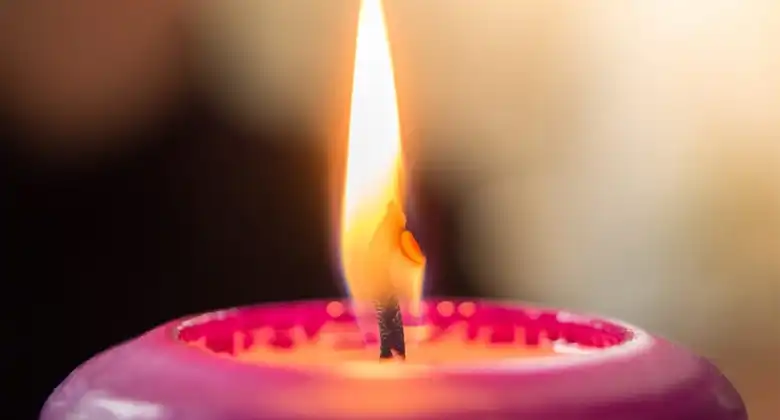
Since ancient times, the flickering flames of candles have captivated people with their dance of warm, luminous colors. The yellows, oranges, reds, and occasional blues entice both our eyes and hearts. But have you ever wondered, what makes candle flames glow with such radiance and diversity of hues?
In this article, I will explain the chemistry and physics behind the colors of candlelight.
Chemistry of Combustion

Candles are primarily made of wax, a mixture of organic compounds called hydrocarbons. Common types of wax are paraffin, a mixture of alkane hydrocarbons, and beeswax, which also contains fatty acids like palmitic and stearic acids. When the wick is lit, its heat melts the wax near it into a liquid, which then gets drawn up the wick via capillary action. The liquid wax vaporizes at the top into combustible gases.
When these gases meet air, the oxygen reacts with the hydrocarbons in the wax through combustion. This chemical reaction produces carbon dioxide and water vapor as main products, releasing energy in the form of heat and light. The structure and composition of the wax determines the types of hydrocarbons present, which in turn affects the colors produced.
Inside the Flame: Different Zones of Candle Flame

The candle flame consists of several distinct zones characterized by different temperature ranges and chemical processes.
The innermost part is the fuel zone, ranging from 200-400°C. In this coolest zone, the melted wax finishes vaporizing into unburnt gases. Some blackbody radiation is emitted as heat from the soot particles, giving this zone a black/blue glow.
The middle zone is the reduction zone at 500-800°C. Here, the hydrocarbons and oxygen partially react in incomplete combustion, producing solid soot particles from the excess carbon. The soot particles heat up until they incandesce, emitting yellow and orange light.
The hot, barely visible outer zone is the oxidation zone at 1400-1900°C. This is where complete combustion occurs, with the hydrocarbons fully reacting with oxygen to produce carbon dioxide and water vapor. The excited gases emit a faint blue glow through chemiluminescence.
Science of Flame Color

The most prominent colors – yellow, orange, and red – arise from blackbody radiation and incandescence of soot particles formed during incomplete combustion. In the hottest zones, the solid carbon in the soot gets heated up to temperatures where it visibly glows, like an electric heating element. This incandescence covers a broad spectrum of wavelengths, peaking in the yellow-orange region our eyes perceive.
The fainter blue and green hues come from luminescence, where excited molecular gases emit specific wavelengths of light. The chloride and sulfate salts commonly found in wax glow green and blue when vaporized. Excited nitrogen and hydroxide molecules also emit blue and green luminescence.
What Affects Flame Color?
Many factors influence the intensity and hues of candle flames:
- Wax composition – Paraffin, stearic acid, and other wax components burn differently. Beeswax and plant-based waxes in particular give more yellow flames.
- Wick material – Cotton, paper, and wood wicks produce different amounts of soot when burning, changing the orange and yellow hues.
- Flame temperature – More airflow gives a hotter, bluer flame while a cooler flame is more orange/yellow.
- Impurities – Salts, minerals, or metals can impart color when heated. Sodium produces a bright yellow flame.
- Additives – Compounds like boric acid or chlorides can be added to produce green and blue tints. Firework makers use metal salts to create colorful sparkles.
Summary
In summary, candle flames derive their variety of vivid colors primarily from the blackbody radiation of incandescent soot particles, along with additional spectral lines from excited gas molecules. The complex interplay of combustion chemistry, soot formation, temperature, and composition gives candlelight its unique, charming glow. The colors also relate to our innate connection with fire across cultures and history. Hopefully, now you view candle flames as far more than just aesthetic decoration – they are a resilient reminder of beautiful chemistry at work!
Frequently Asked Questions
Do all candles burn with the same colors?
No, factors like wax type, wick material, additives, draft conditions, etc. influence the flame color. Beeswax and plant-based waxes produce more yellow/orange flames compared to paraffin.
Can I make colorful candle flames without additives?
Yes, by varying the fuel composition and combustion conditions like airflow, you can achieve different flame colors naturally without additives. More air yields a hotter, bluer flame.
Is a candle flame hot enough for complete combustion?
In the inner zones near the wick, incomplete combustion occurs. But the outermost zone does reach temperatures of 1400-1900°C where the reaction is complete.
Why are candle flames sometimes different heights?
Wick thickness, wax viscosity, melt pool diameter, and draft conditions affect how high the flame burns. Longer wicks and more liquid wax make taller flames.
Are candle flames related to the colors we see in fireworks?
Yes, the same principles apply. Fireworks use metal salt additives to emit specific vivid colors through flame chemistry.